September 23, 2026
Gradient's New Expected Possession Value Model Explained
Announcements



For years, Major League Soccer occupied an uncomfortable position in global football's ecosystem: respected enough to attract aging superstars seeking a lucrative end to their careers, but not quite legitimate enough to compete for young talent or players in their prime. MLS was deemed a retirement league, a comfortable landing spot for legends like David Beckham, Thierry Henry, and Andrea Pirlo. Players whose best days were behind them but whose names still sold tickets.
That narrative is changing. Not overnight, and not across all clubs, but a closer look at the transfer market reveals an emerging transformation. By analyzing transfers from Europe's Big 5 leagues (Premier League, Bundesliga, LaLiga, Serie A, and Ligue 1) to MLS between 2020 and 2026, a pattern emerges: MLS is transitioning from a destination league to a legitimate competitor in the fight for talent.
The question is no longer if MLS teams have the right to scout talent from Europe's elite leagues, but how clubs can systematically identify the right players. We believe that our player grades, which covers Europe's top 5 leagues and will include MLS for the 2026 season and beyond, is an integral tool for player recruitment. Our team of industry veterans and experts evaluates every player on every event that takes place during a game, providing analysis and insights with unmatched attention to detail.
If you want to find out more about our Player Grades before reading on, visit: https://www.gradientsports.com/grades
Let's start by analyzing recent transfers from Europe's Big 5 leagues to MLS. Transfer fees don't lie about ambition, and MLS's spending trajectory reveals a league that's not just talking about growth, it's actually investing in it. In 2025 alone, MLS teams spent $64.8 million on players from the Big 5, nearly triple the 2020-2024 annual average. And 2026 has started even hotter: just one month in, clubs have already spent $24.4 million in the winter window, which will remain open until March 26.
.png)
The reported $26.5 million paid for Heung-min Son, who was still excellent in the Premier League at age 33, broke the previous MLS individual transfer fee record. But the Son deal wasn't an outlier, it capped a year where the league-wide record was broken three times. The spending wasn't limited to a few ambitious clubs either: eight different teams set new internal records in 2025. When clubs pay Premier League-caliber fees for players who can still contribute at the highest level, it fundamentally changes the conversation about MLS's place in the global market.
The retirement league label persists, but the age breakdown tells a different story. Between 2020 and 2024, 42% of all transfers from the Big 5 leagues involved players aged 30 or older. In 2025-2026, that figure has dropped to 29%. More importantly, MLS is willing to pay for younger players: average fees for under-28s doubled from $1.9 million (2020-2024) to $4.3 million (2025-2026). For example, Atlanta United paid $13 million for 28-year-old Aleksey Miranchuk, who'd just won the Europa League with Atalanta. Colorado spent $7 million on 21-year-old Paxten Aaronson from Eintracht Frankfurt. These players had European futures available, but chose to come to MLS instead.
If MLS teams have earned the right to scout Europe's Big 5 leagues, what should clubs look for? The data suggests three distinct profiles worth targeting:
Prime-age players with limited opportunities
Players aged 25-30 who are stuck on the bench at top clubs or whose physical profile doesn't match what Europe's elite demand: the technically skilled but undersized playmaker, the creative midfielder who lacks defensive intensity, etcetera. MLS can offer something top European clubs often can't: guaranteed playing time in a competitive league where their strengths are valued.
Players in their early twenties looking for a pathway back
The Paxten Aaronson model, focusing on players under 25 who moved to Europe early but haven't fully broken through. MLS can serve as a high-visibility platform where they can play regularly, develop, and potentially earn a second look from Europe. The league's growing credibility and the 2026 World Cup in North America make it an increasingly attractive place for young players to rebuild their stock.
Veteran leaders on free transfers
Yes, the traditional model still works. Players like Lionel Messi, Thomas Müller and Marco Reus bring tactical knowledge, professionalism and star power that can drive revenue. The difference now is that these signings complement rather than define MLS's transfer strategy.
—-------------------------
Now let’s use these profiles and Gradient’s unique player grades and metrics to identify a couple of potential targets.
Maxime Lopez (28), Paris FC, CM/CDM
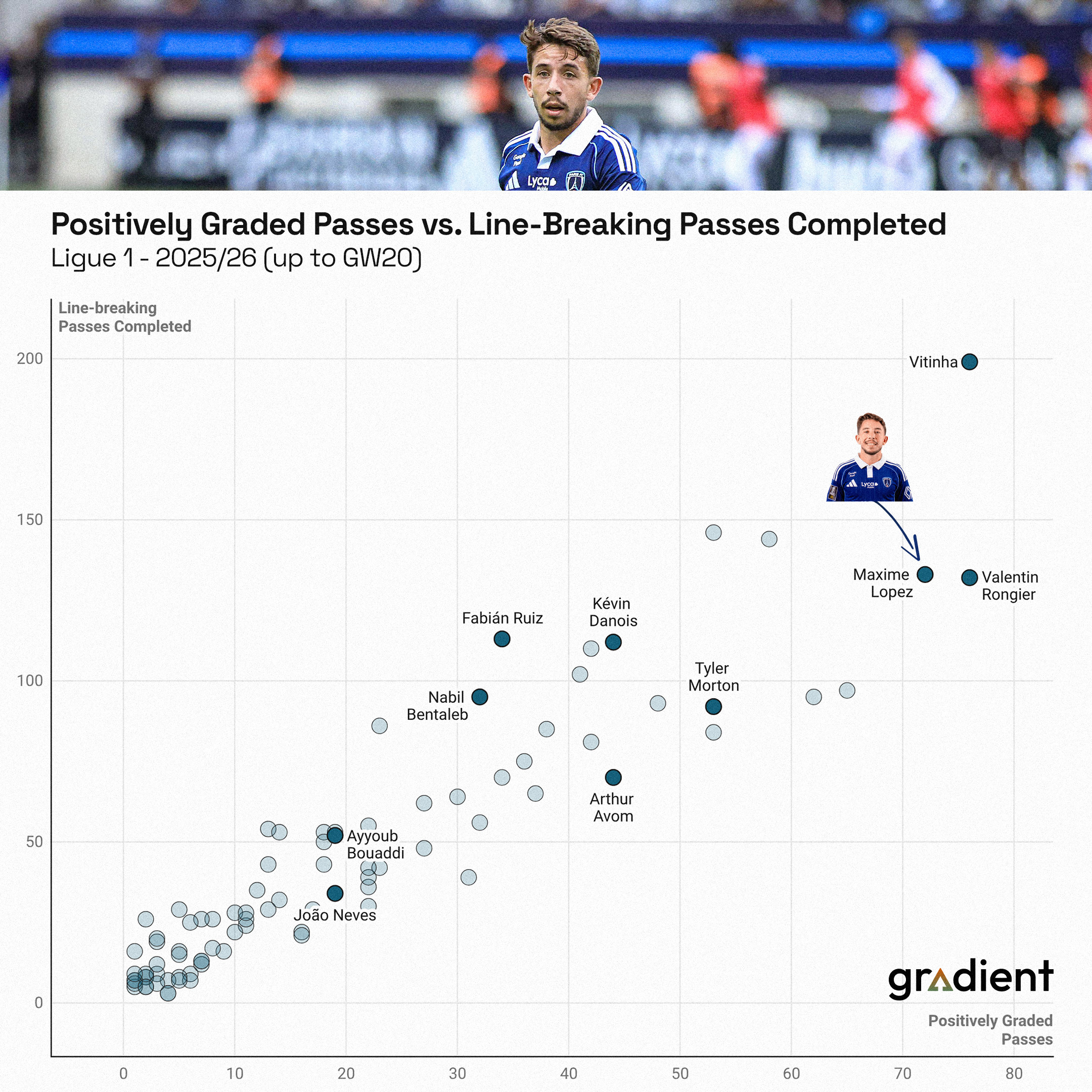
Maxime Lopez is a technician who excels at breaking lines and dictating play. His 85.4 Passing Grade ranks 4th among 106 central midfielders in Ligue 1 this season. Lopez’s 133 line-breaking passes completed rank 6th overall, while his 53 passes into dangerous areas rank 2nd among central midfielders. These are impressive metrics, particularly for a Paris FC side currently sitting 14th.
At 28 years old, it is unlikely Lopez will secure a move to a top European side, especially given the recent shift in playing style that prioritises out-of-possession physicality and maximising set-piece opportunities. At 5 foot 4 and a reported 128 lbs, Lopez does not fit this profile, but he could emerge as one of the most progressive passers in MLS.
Kevin Akpoguma (30), TSG Hoffenheim, CB/LB
Admittedly, prime-age might be a stretch for a player who turns 31 in April, but Akpoguma still has a decent number of years ahead of him. The Nigerian international has become a club legend in his 13 years at Hoffenheim, but has struggled to find enough minutes this season. Looking at his performance in 2024-2025, the centre back was still above the positional average for most grading categories. With his contract expiring at the end of the season, any MLS team looking for an experienced defender should consider targeting Akpoguma.

Leon Bailey (28), Aston Villa, RW
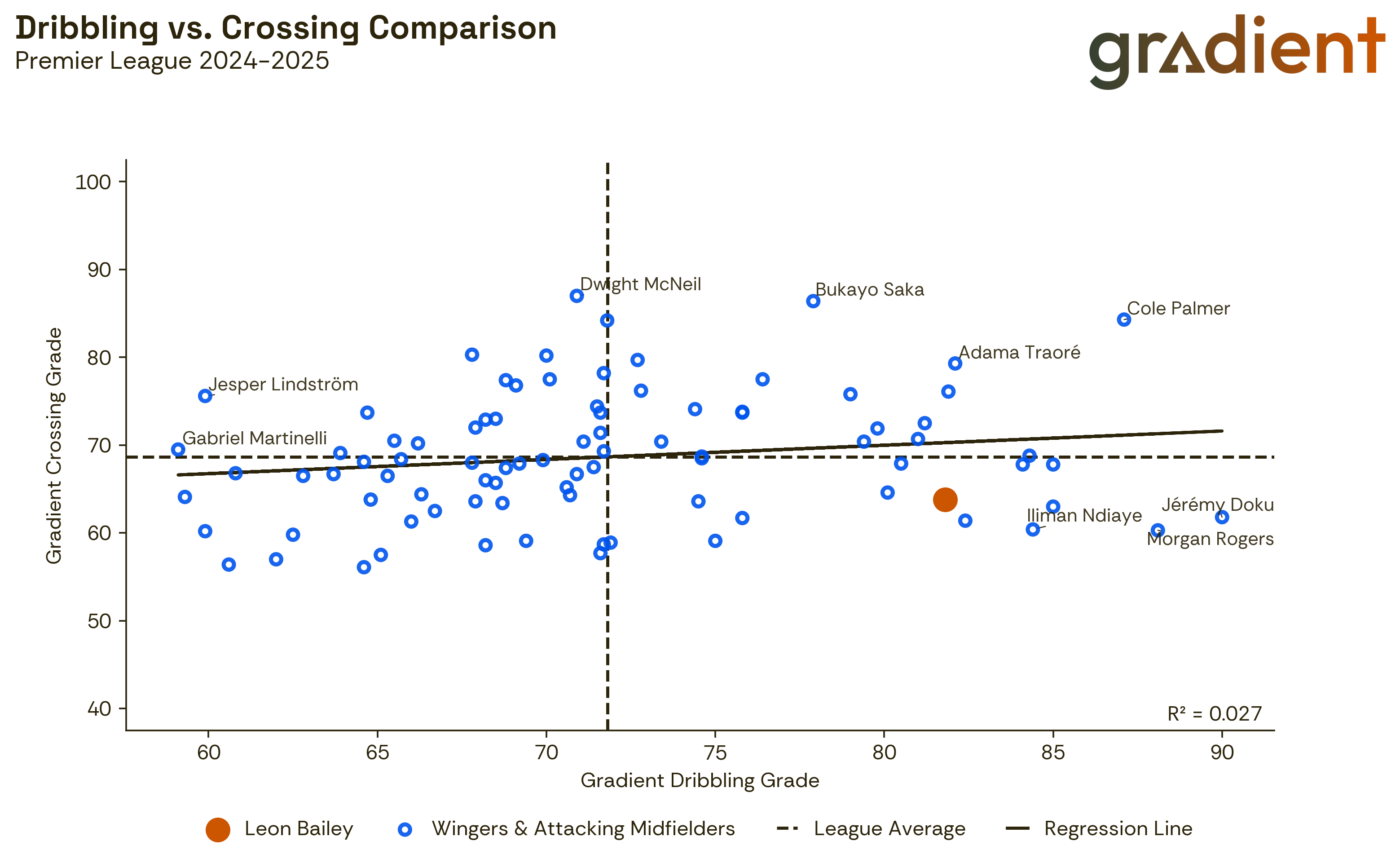
Leon Bailey has featured for both AS Roma and Aston Villa this season, making him cup-tied in Europe but still eligible for MLS, which operates on a different season calendar. Bailey remains an exceptionally skilled dribbler. Last season, he ranked 3rd in the Premier League for percentage of dribbles attempted above expectation (receiving a positive grade) among all players with at least 20 dribble attempts.
Injuries to Aston Villa’s attacking options prompted his recall in January, and he is now expected to feature regularly for the remainder of the season. With Jamaica’s Inter-Confederation playoff scheduled for March and the World Cup in the summer, Bailey is likely to see consistent minutes to rebuild match fitness and regain form, potentially positioning himself for a move to MLS towards the end of the current transfer window.
—-------------------------
Johnny Cardoso (24), Atletico Madrid, CM/CDM
Yes, it will take a significant amount of money to convince both Atleti and Cardoso to make this transfer happen, but Cardoso must be looking for a way back into the USMNT. With his struggles to find regular playing time, and most transfer windows now closed, taking one step back might help him take two steps forward in his career if he is able to make an impact at the 2026 FIFA World Cup.
Giovanni Reyna (23), Borussia Mönchengladbach, WAM
Similar to Johnny Cardoso, Reyna is another former US starlet who switched clubs this summer only to find himself in a difficult position heading into the months leading up to the World Cup. The son of former US captain, Claudio, Giovanni Reyna has still to play a full 90 minutes for a middle-of-the-road Gladbach side since his €4 million transfer from Dortmund. Could he be persuaded into a return across the Atlantic, to find some well-needed confidence with consistent playing time?
Kevin Paredes (22), VfL Wolfsburg, LB/LWB
Four years after leaving DC United for the Bundesliga, Paredes finds himself at a crossroads. After making 22 and 28 league appearances in his first two full seasons at Wolfsburg, a foot injury limited him to just two appearances in 2024-2025. He's managed only three so far this season following surgery. With his contract expiring this summer and Wolfsburg likely looking to recoup some of their investment, Paredes needs consistent minutes to regain match fitness. A return to MLS, where he broke through as a teenager, could offer the high-visibility platform he needs to rebuild his form. At 22, he fits the profile perfectly: talented, experienced in Europe, but needing a reset.
—-------------------------
Casemiro (33), Manchester United, CM
It was announced earlier this year that the 33-year-old Brazilian will leave the club at the end of the season, but Manchester United midfielder Casemiro is currently enjoying his strongest run of form since arriving at Old Trafford in a £70m move in 2022. Since Michael Carrick took charge and moved Bruno Fernandes further forward, Casemiro has excelled in a midfield partnership with Kobbie Mainoo. He no longer has the legs to anchor the midfield alone, but he continues to offer bite in challenges and composure in possession.
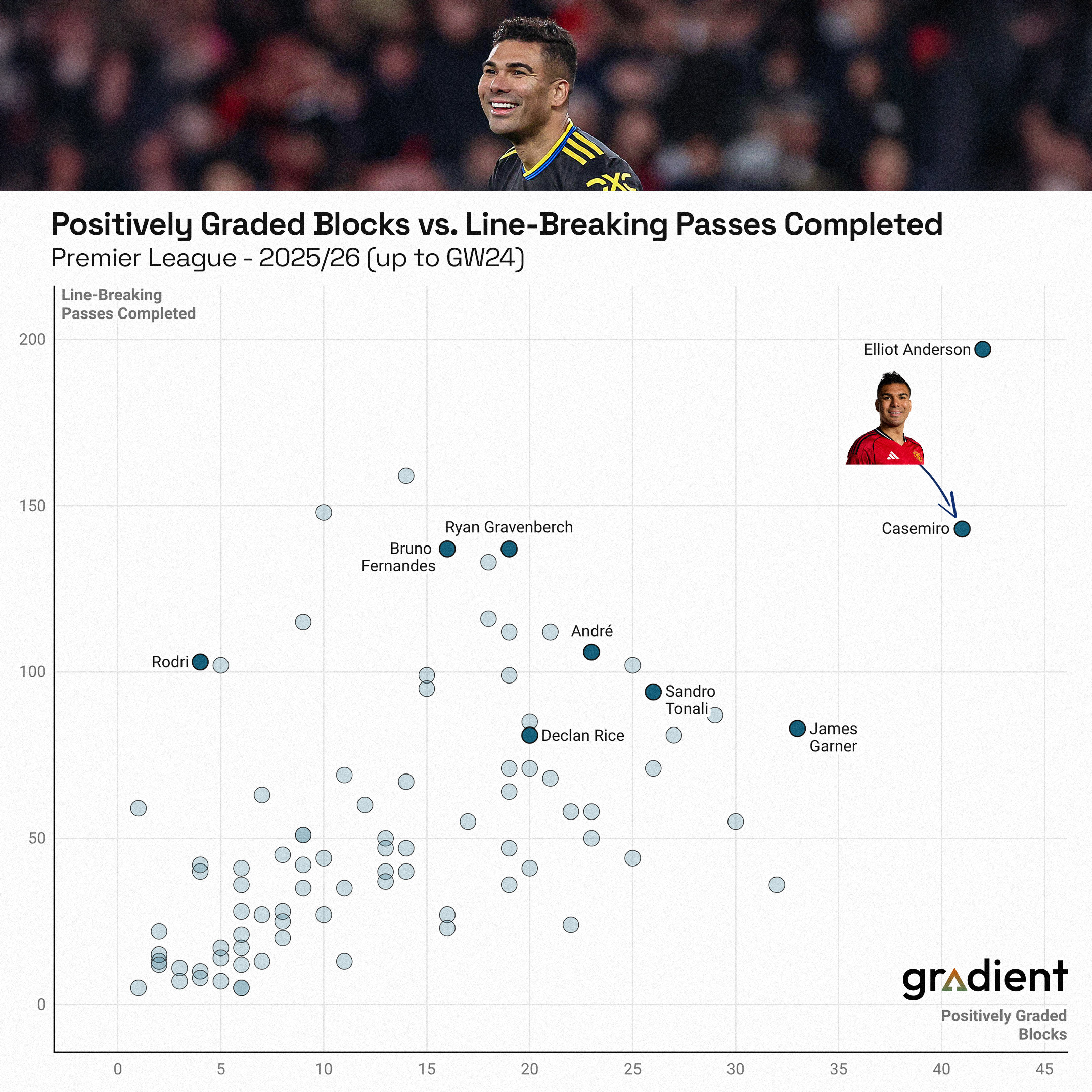
Casemiro’s 81.3 Passing Grade ranks 11th among 105 Premier League central midfielders this season. He has completed 18 of 20 switch passes and completed 143 line-breaking passes, the highest total among Manchester United players.
Defensively, his 62 successful blocks rank first among central midfielders, while his 13 challenges won in dangerous positions rank second. Casemiro is now a limited athlete, but in the right midfield pairing he can still provide control and defensive substance.
Robert Lewandowski (37), FC Barcelona, CF
Poland's most decorated footballer turns 38 in August but remains a clinical finisher. With his Barcelona contract expiring this summer and reports suggesting he'll make a decision in April, MLS clubs like Chicago Fire are reportedly monitoring his situation. Despite limited minutes this season (under 1,000 in La Liga), Lewandowski's shooting remains elite: ranking in the top 5 for shooting quality (4th), unpressured shooting (4th), and open play shooting (3rd), while leading all La Liga strikers in headed shooting. He's the only player with fewer than 1,000 league minutes to crack the top 15 in expected goals. A move to MLS would follow the traditional veteran model, but Lewandowski's production suggests he'd be far more than a ceremonial signing.
.png)
Paulo Dybala (32), AS Roma, CF/WAM
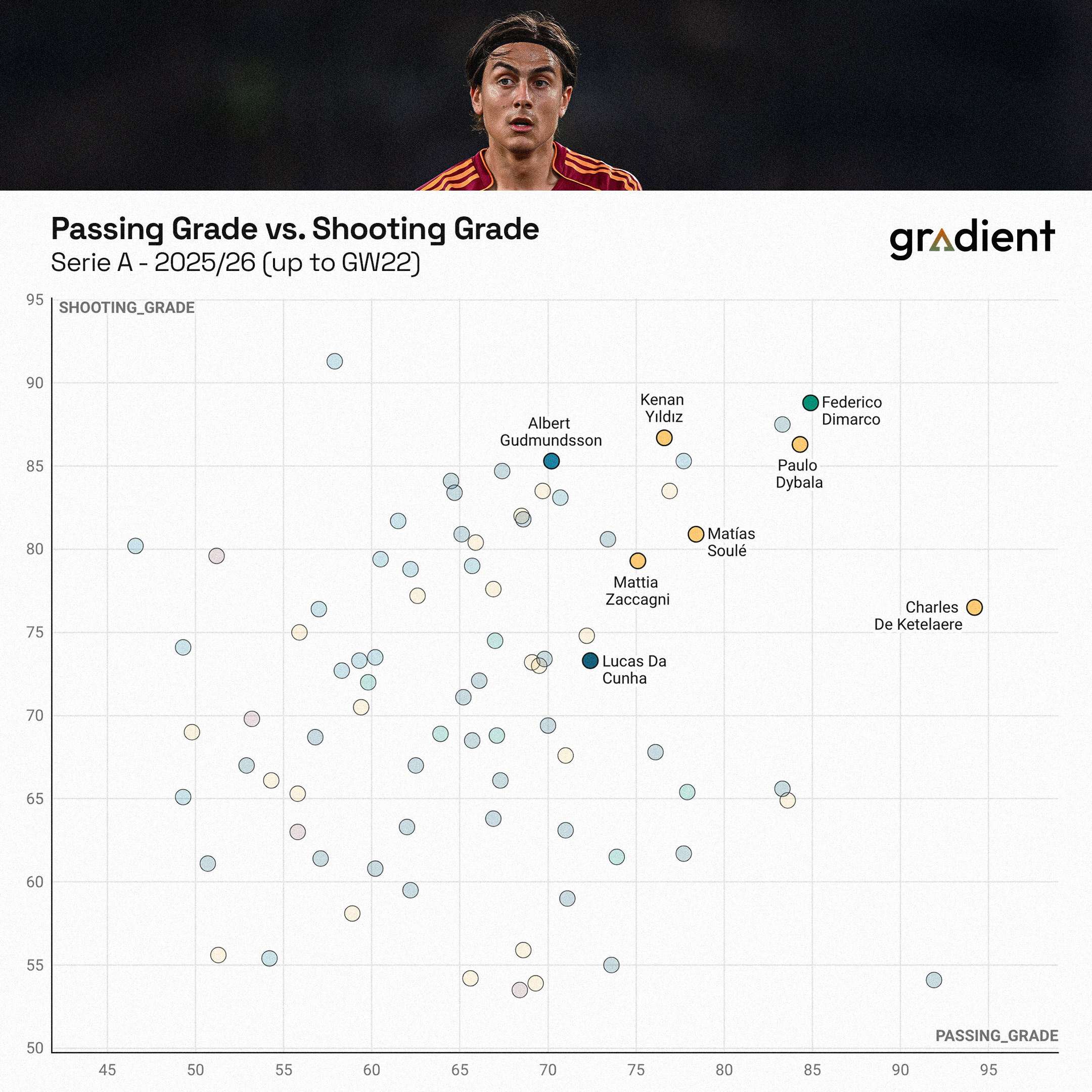
After 13 seasons in Serie A, Dybala's contract expires this summer, and his Italian career appears to be ending. The Argentine playmaker has previously rejected lucrative Saudi offers, raising the possibility of an MLS move. Despite limited minutes this season (under 1,300), Dybala remains elite in key areas: ranking 1st among Serie A wingers & attacking midfielders in shooting quality (81.0 grade), 2nd in pressured passing, and the only player in the league's top 15 for passes into dangerous positions with fewer than 1,300 minutes. At 32, he's the type of veteran leader who could thrive in MLS for years.
If you're interested in finding out more information about our player grades and advanced metrics, please get in touch, at sales@gradientsports.com.