September 23, 2026
Gradient's New Expected Possession Value Model Explained
Announcements


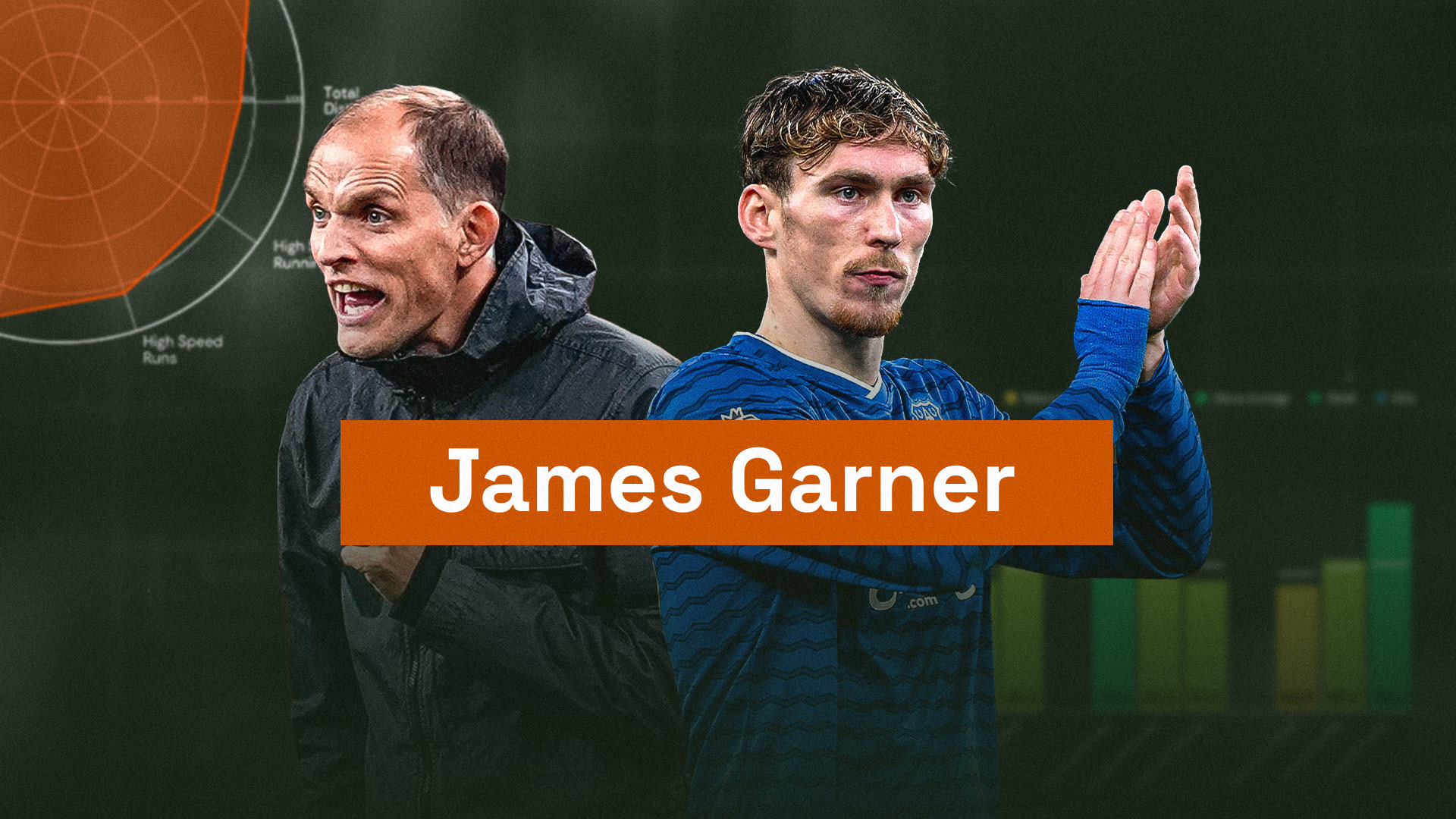
Thomas Tuchel’s decision to extend his contract as the head coach of England ahead of this summer’s FIFA World Cup removes some uncertainty around England, but selecting a 26-man squad still presents many difficult trade-offs, particularly in midfield.
England arrive in the United States, Canada and Mexico with eight wins from eight in qualifying and a run of deep tournament finishes under Gareth Southgate. Converting that consistency into a trophy remains the challenge, and depth options will matter as much as the starting XI.
England’s midfield has been a particular area of strength since Tuchel implemented his 4-2-3-1 system, a formation also used by David Moyes at Everton—a team Tuchel has been watching closely as of late. Over the past month, he has been in the stands at Villa Park and Craven Cottage, observing Everton as he builds a clearer picture of his selection plans. Around the same time Tuchel extended his contract until the end of Euro 2028, Everton midfielder James Garner also signed a four-year extension following a standout season for the Toffees.
Consensus suggests four midfielders is the number Tuchel will opt to take, with Crystal Palace’s Adam Wharton being the third-choice behind starters Declan Rice (Arsenal) and Elliot Anderson (Nottingham Forest). Yet to receive a call-up to an England squad, have the performances of James Garner proved he should be the fourth?
Every World Cup comes with a scare or an upset for one of the tournament’s favourites, and in games where things do not go to plan you need a bench to turn to. Garner’s ability to win duels in the air and on the ground, combined with press resistant carries can get England back in possession and on the front foot.
His challenge grade of 87.8 ranks first amongst all midfielders and sixth overall in the Premier League, excelling in 50-50 challenges particularly with an elite grade of 90.6. This is streets ahead of Rice’s 80.1, Wharton’s 75.1, and Anderson’s 72.5.
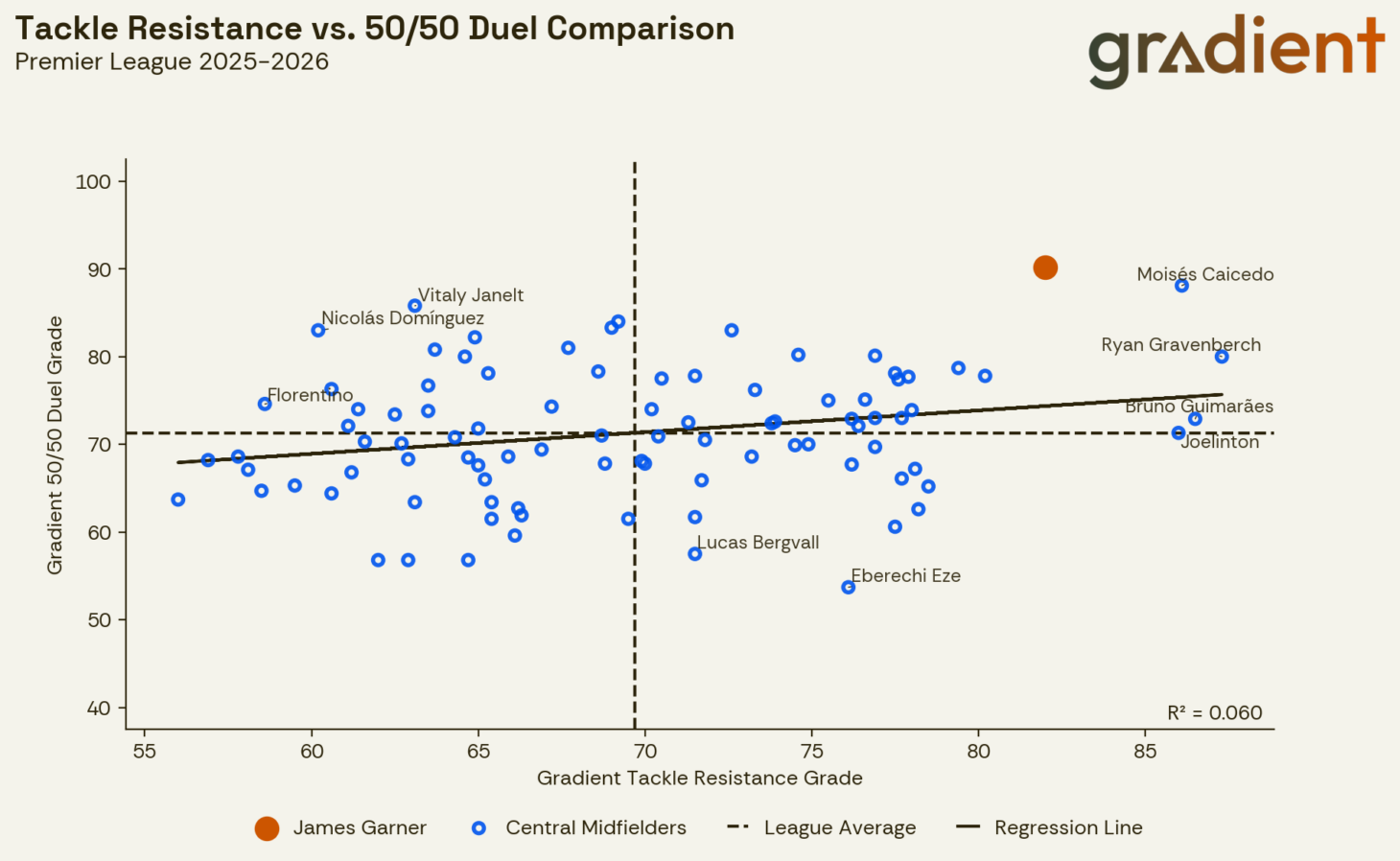
Garner also leads the way in tackle resistance grading among England-qualified midfielders with an 82.0 grade, a marked improvement on his 71.3 grade from a season ago. Only Ryan Gravenberch, Bruno Guimarães, Moisés Caicedo and Joelinton rank higher.
Garner has been close to ever-present for Everton. He would have played every minute alongside Jordan Pickford and James Tarkowski if not for a late substitution against Chelsea in December.
Moyes relies heavily on him when protecting results. Of his 2,573 minutes played, 813 have come while Everton were out of possession, the highest figure among midfielders. Much of his work therefore comes in deep defensive areas.
If England are protecting a late lead, that profile becomes useful. Garner averages 16.06 pressures per 90 in his own third, second only to Alex Scott of Bournemouth (16.09) among England-qualified players and well above the positional average of 13.01.
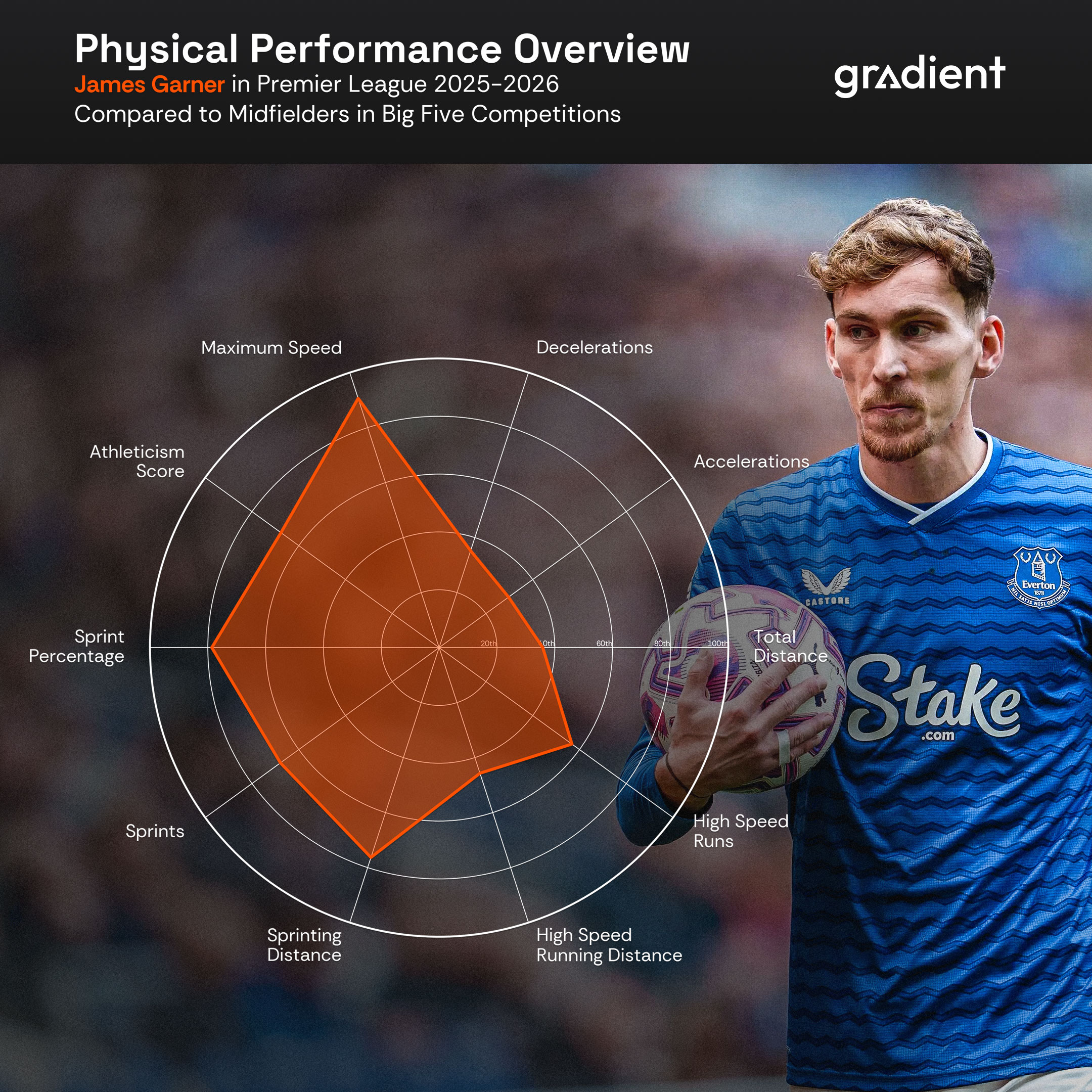
Tuchel is spoilt for riches in attacking options high up the pitch, so it will be down to the midfield to facilitate the likes of Harry Kane, Eberechi Eze, and Morgan Rogers receiving the ball in dangerous areas.
If we lock in Rice, Anderson and Wharton as certain picks, then Garner trails only Liverpool’s Curtis Jones in Gradient’s pass grading model among contenders for the fourth spot in the squad.
Garner’s 77.3 grade is just short of his former England Under-21 teammate Jones (82.2), with whom he won the Euro 2023 Championship under Lee Carsley. This is, however, ahead of Kobbie Mainoo’s 74.2 grade and Jordan Henderson’s 56.1.
It would not be fair to include Trent Alexander-Arnold’s performance due to his injury-hit first season at Real Madrid since his switch from Liverpool, but like many England fans we are monitoring his return to action ahead of Thomas Tuchel naming his squad for friendlies against Uruguay and Japan in March.

Ultimately, Garner offers a profile that complements rather than duplicates England’s established midfield options. His defensive output, durability and ball security suggest he could be trusted in high-leverage moments, particularly when protecting a lead or restoring control. While he may not displace the likely starters, the data indicates he can perform a clearly defined role at international level. For a tournament squad where adaptability and reliability are critical, that may be enough to move him from outsider to viable fourth choice.